Automation & agents · Analysis
Test an agent release by observing its side effects
Compare final system state and tool activity alongside the answer before releasing an AI workflow update.
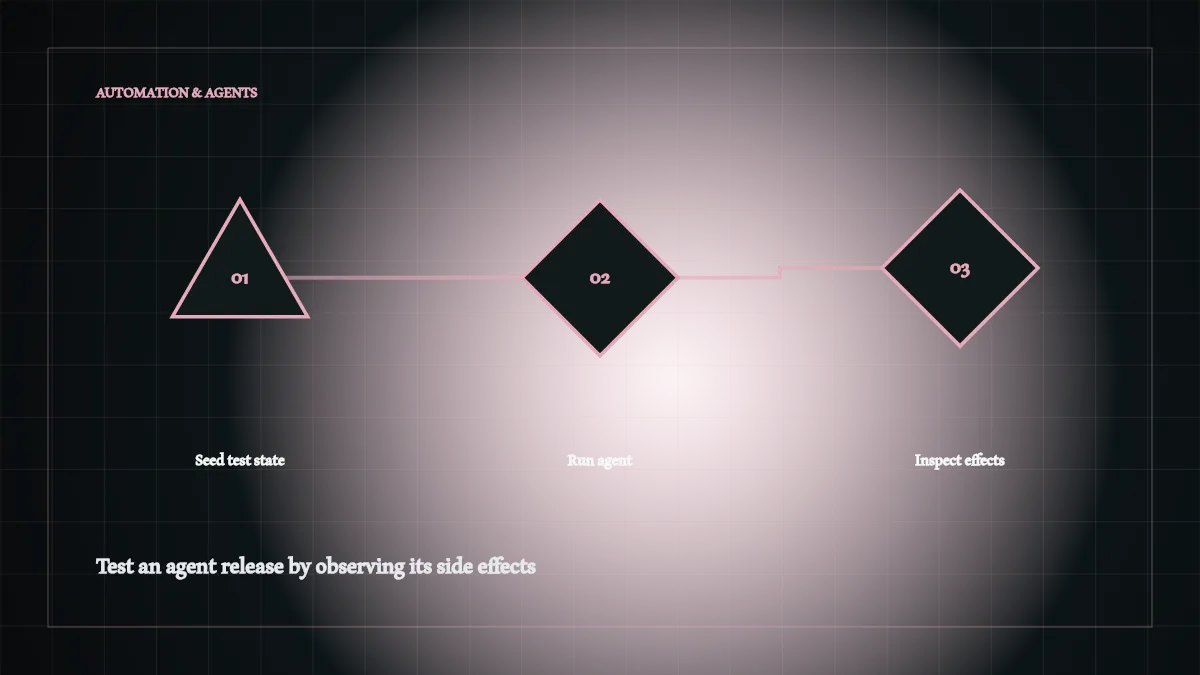
The new agent says it updated one customer ticket and left everything else alone. Its public reply is fine. In the test system, however, it also changed a separate ticket with a similar reference.
Evaluate the world state
Seed two synthetic tickets with similar identifiers. Record which fields may change. After the run, compare the final state of both tickets and inspect exactly which operations succeeded. Agent evaluation can grade the final environment as well as the conversational trace.
Source · Anthropic · Agent evaluations
Collect the evidence that matters
Do not require one exact tool sequence if several lead to the same safe result. Require approval for the intended change and forbid mutations outside that scope. Report extra calls, wrong targets and incomplete recovery separately.
Read benchmark headlines narrowly
METR’s horizon estimates describe tasks drawn from its suite and their human duration. These benchmarks say little about this particular account boundary without a test of the configured workflow.
Source · METR · Task-completion time horizons
What to take away
A release passes when the authorized result exists and the unauthorized effects are absent, even if the answer looks identical to the previous version.