Crypto guides · Analysis
How to read an exchange proof-of-reserves report
Check the scope, date and liabilities behind proof-of-reserves claims before relying on a published wallet balance.
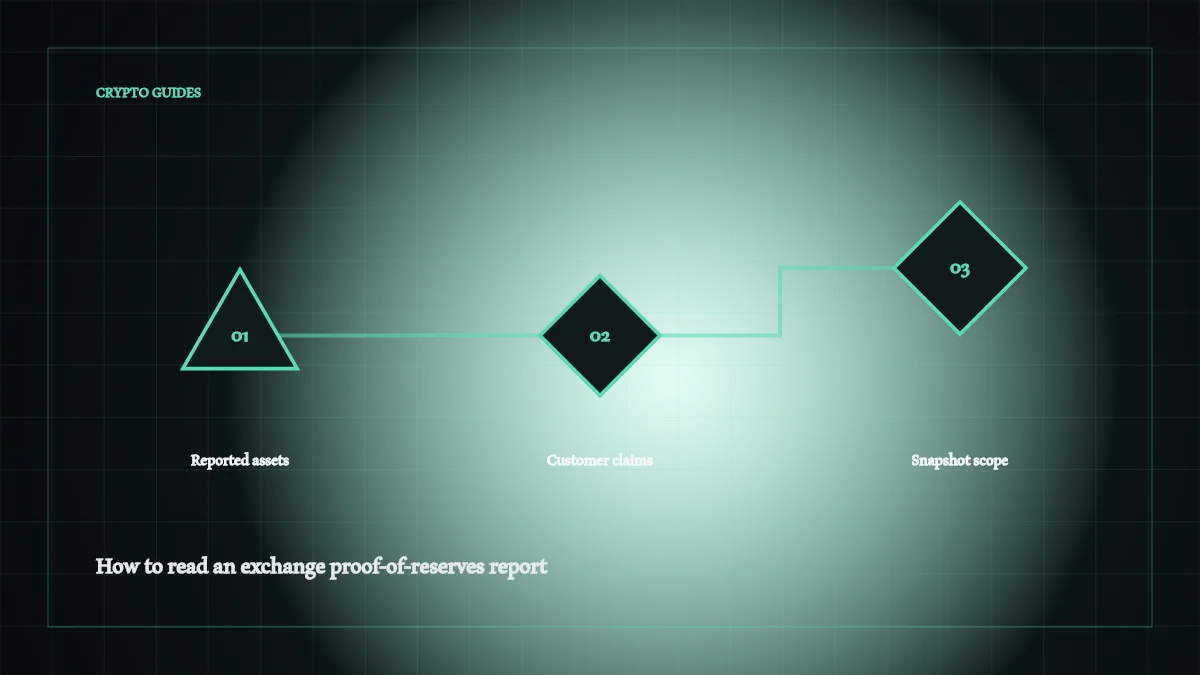
An exchange publishes wallet balances and invites customers to verify their inclusion. This is worth examining, but the useful questions are about what the report covers and what an individual inclusion check actually establishes.
Check both sides of the claim
A balance in a wallet can support an asset snapshot. The customer claims against the exchange belong on the liabilities side. Ask which products, entities and assets were included, and whether the procedure checked asset control, borrowings, pledged assets or restrictions.
Distinguish inclusion from completeness
A service might give each customer a cryptographic inclusion check. A successful check addresses whether that entry appears in the reported dataset. Completeness of the full set and how negative balances or other obligations were treated require separate evidence.
Read the report date and procedures
The staff of the U.S. Public Company Accounting Oversight Board cautions that proof-of-reserve reports vary in scope and are distinct from financial-statement audits. A snapshot dated last month also says little by itself about balances or obligations after that date.
What to take away
Before comparing reserve ratios, check that dates, liability scope and verification procedures are comparable. A missing answer is part of the finding.