Crypto guides · Analysis
What a successful token-transfer receipt actually proves
Read an EVM receipt, identify the correct ERC-20 Transfer log, and distinguish execution on-chain from credit in an exchange account.
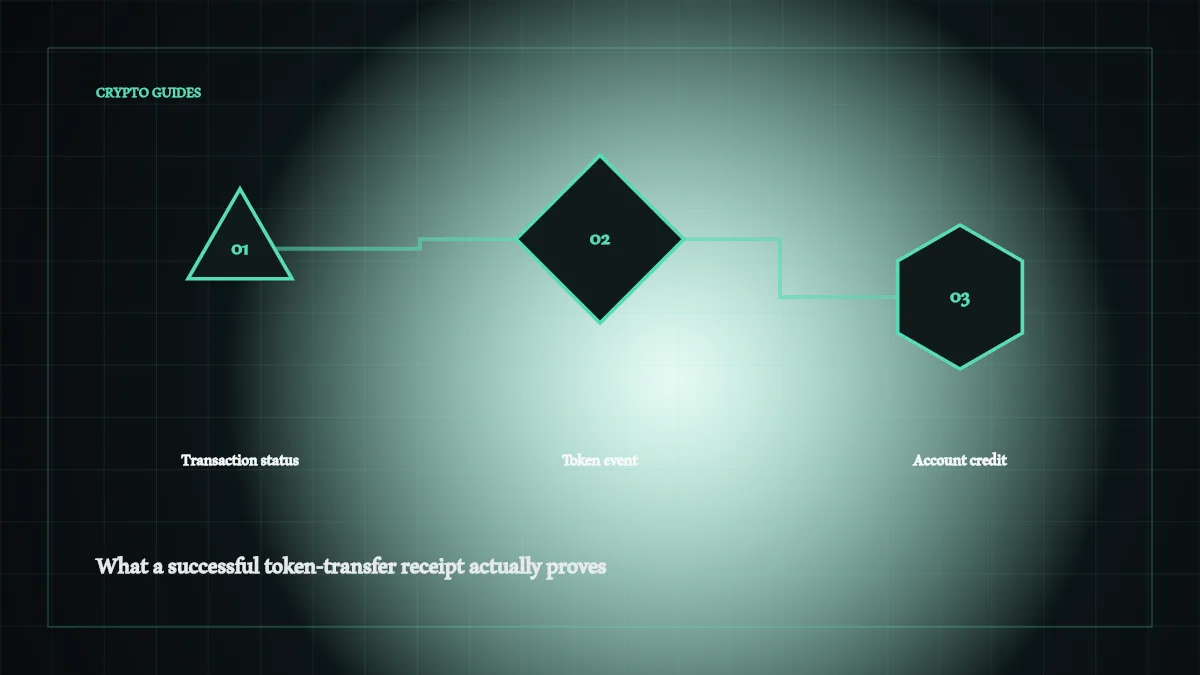
An explorer shows “success” for a transaction, but its value field is zero. That is common when native ETH was not the asset being transferred. For ERC-20 transfers, the question is which token contract emitted which event during the transaction.
Read the receipt in layers
A successful transaction receipt reports execution status. Its logs report events emitted by contracts. The outer recipient can be a token contract, router or other application instead of the person receiving the token. The outer native value and ERC-20 amount can therefore differ.
Source · Ethereum.org transaction documentation · Ethereum.org JSON-RPC methods and receipt format
Match the event to the intended transfer
Look for a Transfer event emitted by the expected token contract and compare its sender, recipient and amount. Some transactions contain several token movements. The token’s displayed amount also depends on its decimals convention, which ERC-20 defines as optional metadata.
Source · Ethereum ERC-20 token standard
Ask what the receipt cannot answer
A valid log is evidence of a contract event on that chain. A custodial exchange may apply its own supported-asset and confirmation policy before it credits an account. If you need support, provide the network and transaction hash through the official support channel.
What to take away
Match the event against the intended asset and recipient, then check the service’s account ledger separately if a custodial deposit is involved.