Blockchain research · Analysis
An L2 receipt and a bridge withdrawal run on different clocks
Separate L2 execution, Ethereum anchoring, and the proof or challenge steps that determine when a bridge withdrawal is claimable.
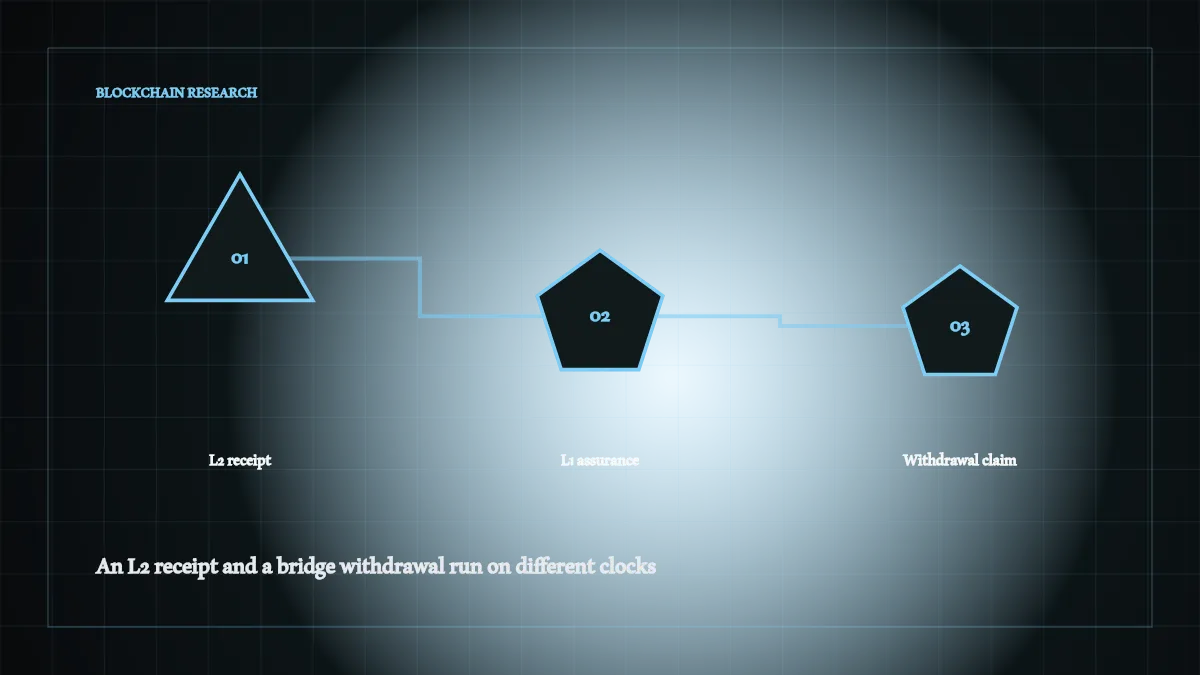
A user sees their withdrawal transaction included on L2 and wonders why the Ethereum wallet has not received the asset. Their transaction and the bridge are reporting different events. A bridge status page should tell the user what happened and which condition is still outstanding.
Read the L2 transaction first
An L2 receipt can establish that the source operation executed or reverted. Optimistic rollups then post transaction data or commitments to Ethereum according to their design. A product can expose when the transaction is first observed, and when it reaches a stronger assurance state.
Source · Optimism documentation on transaction finality · Ethereum.org optimistic rollup architecture
Follow the withdrawal’s own requirements
The canonical optimistic bridge can require a prove and finalize flow, with a challenge or maturity period before the withdrawal can complete. Waiting rules are specific to the deployment and route. A liquidity service can have different timing and add separate assumptions.
Source · Optimism documentation on transaction finality · Ethereum.org optimistic rollup architecture
Make waiting legible
Use labels for source inclusion, waiting for the bridge’s next step, and claim availability or destination delivery. Include a reference for each side. The information a user needs at each point differs, especially if a manual claim is still required.
What to take away
When investigating a delayed withdrawal, obtain the source receipt and the bridge’s own state. A single countdown can hide the action the user actually needs to take.