Automation & agents · Analysis
Parallel research agents need a shared evidence contract
A research workflow can explore several sources at once. Its synthesis still needs dates, provenance and a rule for conflicting claims.
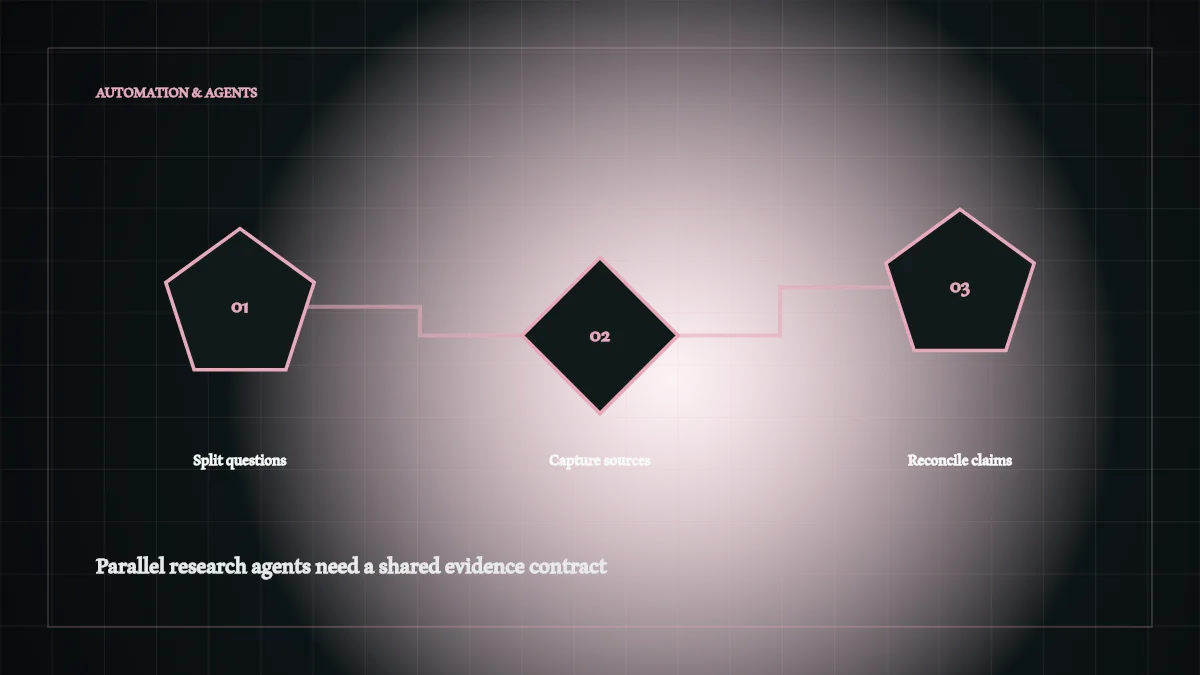
A team asks for the impact of a wallet release. One worker reads the provider’s announcement, another the protocol notes and a third the news coverage. The shared draft fails if those results arrive as three confident paragraphs with no dates.
Split by evidence, not by adjective
Allocate separate questions for the release facts, compatibility, and what was observed by reporters. Anthropic’s research system uses planned delegation and parallel search. The product team still decides what evidence each worker must return.
Require an evidence row
Collect the URL, claim, event date, and whether the evidence is a vendor assertion, specification or independent observation. Run a merge test with two sources describing different stages of availability. The synthesis should preserve their different scopes.
Assign a person to check the finish
Hands-on coverage of research tools has reported useful breadth alongside citation gaps. Require an editor to open sources for consequential facts instead of using the number of agents as a confidence signal.
What to take away
Parallelism improves collection. An auditable evidence table and an editor’s decision make the final article useful.