Crypto guides · Analysis
A passkey wallet still needs a recovery plan
Map the sign-in method, on-chain account and real recovery dependencies before relying on a passkey-based wallet.
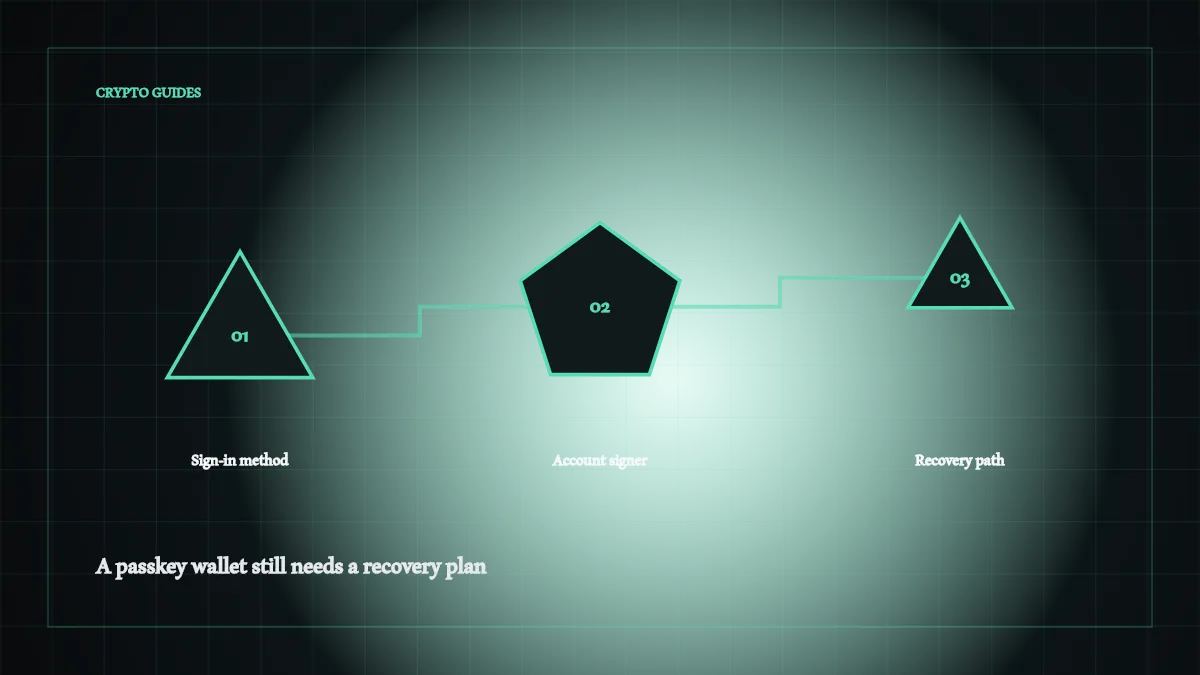
Unlocking a wallet with a fingerprint can feel like using a normal account. The fingerprint, browser prompt or cloud credential interface is only the visible part. A recovery plan starts with the particular wallet’s signer and supported account procedures.
Identify the account and its provider
Wallets can use different sign-in and approval methods. For example, Coinbase documents the environments in which a Base Account passkey may be available. Check which account you created and which device, password manager or platform currently stores the credential.
Check account control separately
An EVM account can have smart behavior with authorization and recovery rules specific to the wallet. EIP-7702 is one example of a mechanism that lets an externally owned account delegate code. The protocol mechanism alone does not define this product’s support or recovery policy.
Write a recovery scenario you can test
Use a test account or an authorized setup to verify what happens on a second device, in a compatible browser or after a device change. Follow only the wallet’s official setup path and record which prerequisites you would need if access disappeared.
What to take away
Before moving material funds, be able to explain what you would use to regain the same account and which devices or providers that plan depends on.