Automation & agents · Analysis
Why a fresh RSS item can describe old news
Separate item publication time, retrieval time, page revisions and the date of the underlying event before labeling a story as new.
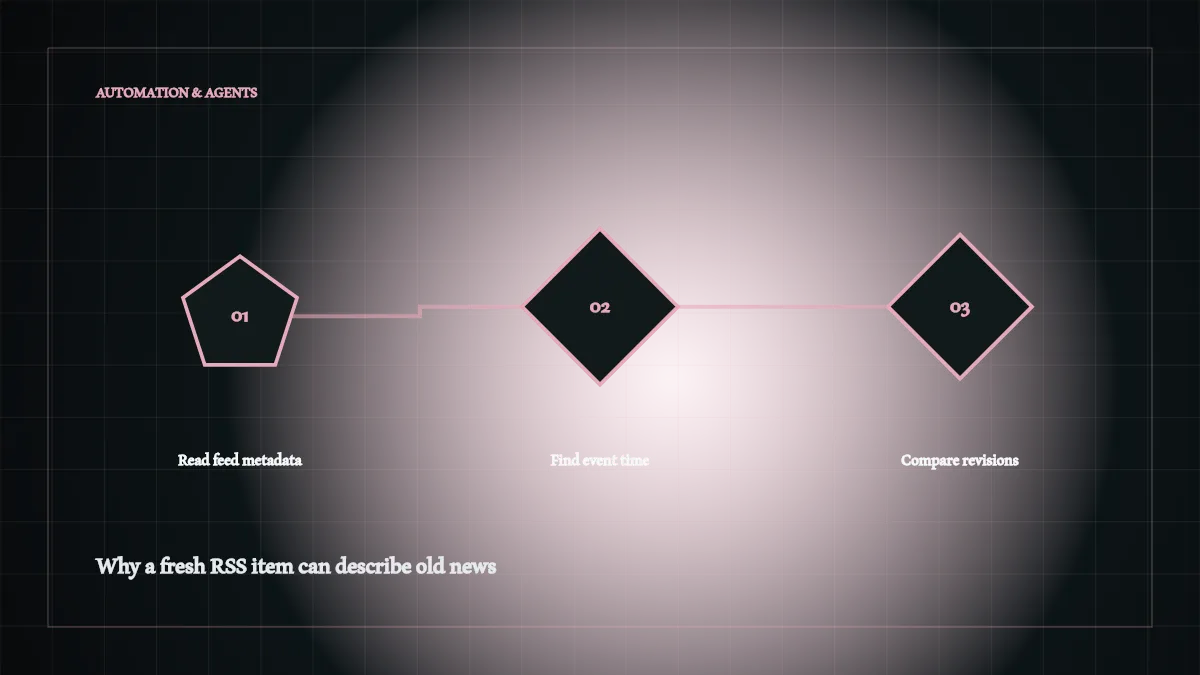
A feed reader sees an item this morning about an upgrade that took place last month. The item could be a recap, an edit, or a newly announced phase. The date on the feed alone cannot decide which.
Treat feed fields as publisher metadata
RSS 2.0 defines optional publication dates and item identifiers. Store both values when present and retain when your job retrieved the item. Missing dates can stay unknown until the underlying announcement supplies evidence.
Locate the event in a primary source
Look for the announcement, changelog or deployment record. Record the description and timezone associated with the date. A new retrospective can appear in the digest if its headline makes the retrospective angle clear.
Decide when an edit is a story
Recheck the article and primary reference when the feed repeats an identifier. An updated migration deadline may deserve its own alert. A formatting or spelling change generally belongs in editorial history.
Source · RSS Advisory Board · RSS 2.0 specification · Google Search Central · Generative AI content
What to take away
Keep event date, feed date and retrieval time as separate fields. Give the headline the date that answers the reader’s question.