Applied AI · Analysis
Valid JSON can still contain the wrong invoice total
Pair schema-constrained AI output with financial invariants, source locations and an explicit path for exceptions.
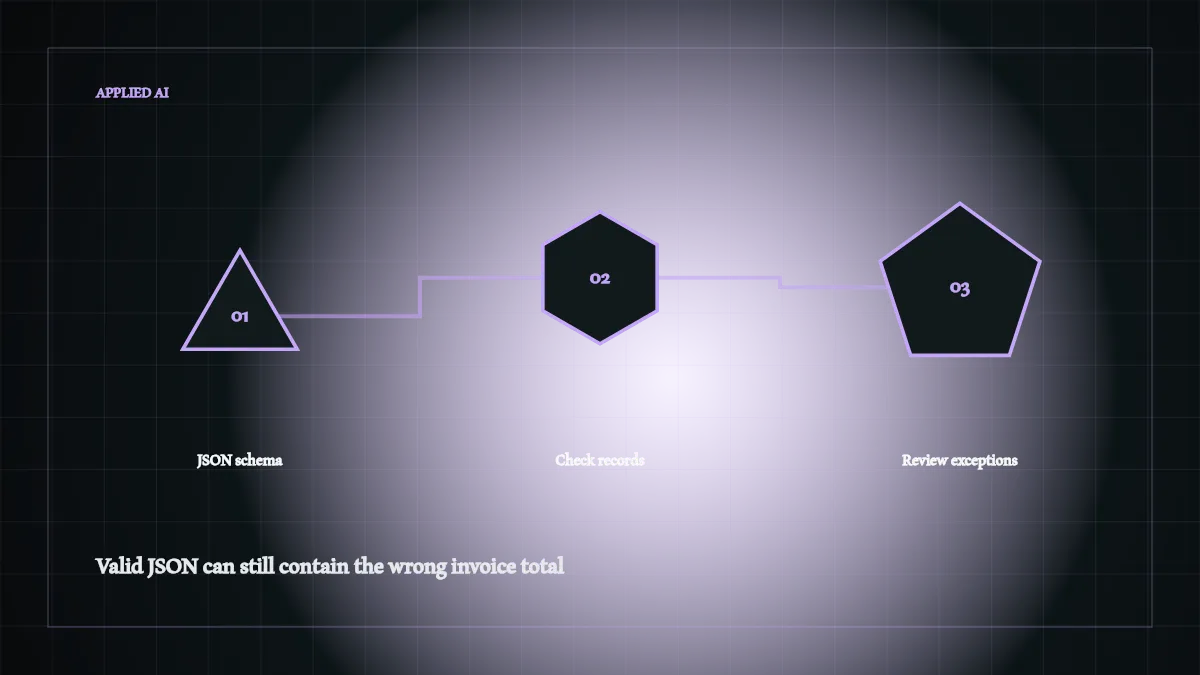
Say a scanned invoice lists a €100 subtotal, €20 VAT and €120 payable. The model returns an integer field called total with the value 100. The response can validate syntactically while sending the wrong amount downstream.
What a schema can enforce
Structured Outputs constrain successful model output to the applicable schema. Required keys, value types and allowed categories are useful at the boundary. An application still needs to handle refusals and incomplete responses and decide whether the value matches the invoice.
Validate the relationship between fields
Extract subtotal, tax and payable as separate fields, with currency and page location. Use integer minor units or a decimal type. Reconcile the arithmetic against explicit discounts or rounding lines, and route ambiguous or contradictory invoices to review. A tax field may be missing, zero, or included in the displayed price, and those cases need different handling.
Place the acceptance test after extraction
Create fixtures for credit notes, repeated subtotals, a carried-forward balance and a second currency shown for reference. Track exact-match accuracy for the payable field, human review rate and wrong auto-accepts. Store the extracted source span so someone can repair a mistake without opening the whole batch.
What to take away
Count a result as automatic acceptance only after both the response format and the financial checks pass.