Product management · Analysis
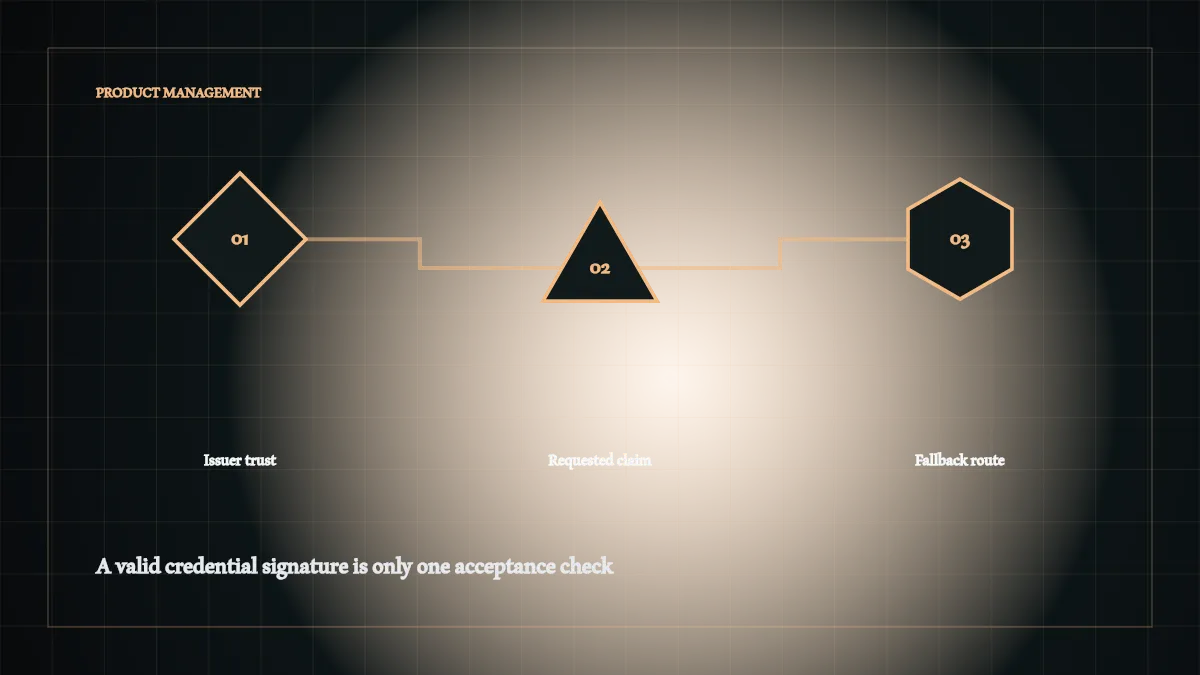
A valid credential signature is only one acceptance check
For a wallet-based identity feature, define trusted issuers, requested claims, proof formats and a route for unusable credentials.
A signup form needs evidence that a customer meets an age threshold. A verifiable credential could let the product receive the relevant claim without collecting a full document image, if the chosen issuer, proof format and implementation support that experience.
Write the verifier’s policy first
The W3C data model describes an issuer, a holder and a verifier. The verifier still decides which issuers, credential types and claims are acceptable. Check the validity period and applicable credential status rules alongside cryptographic verification.
Request only what you can justify
Selective disclosure depends on the securing mechanism. W3C’s JOSE and COSE specification discusses mechanisms including SD-JWT. Verify the actual format and fields disclosed in your integration rather than promising privacy from the credential label alone.
Source · W3C · Securing Verifiable Credentials using JOSE and COSE
Design the unsupported case
NIST implementation resources distinguish wallet-held credentials from scans and describe eligible evidence use in identity-proofing contexts. Test an expired credential, an issuer outside policy and a device without the relevant wallet. Each case needs a workable path to finish enrollment.
Source · NIST · Subscriber-controlled wallets
What to take away
Review the acceptance policy with one valid example and three rejected examples. Ask what information the verifier actually received in each.