Applied AI · Analysis
Streaming can feel faster. Measure when the user can act.
Instrument time to first token, time to useful content, and task completion for AI experiences that stream live responses.
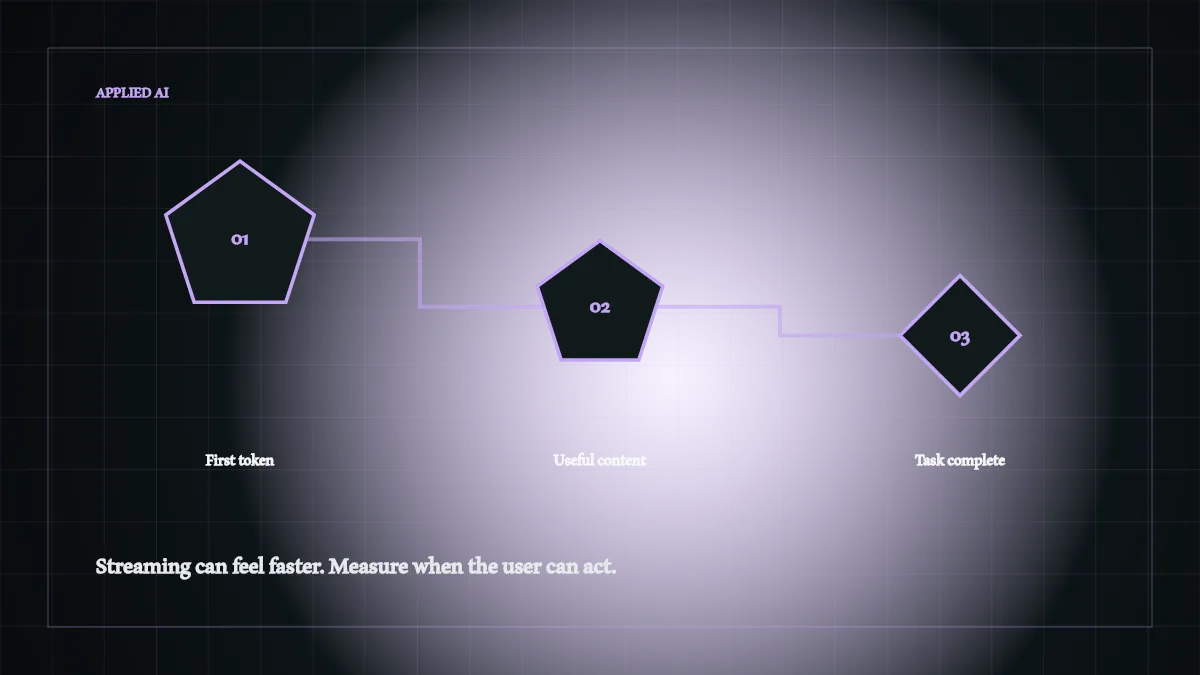
An assistant immediately prints that it is looking into a request and then keeps the user waiting for the one figure they need. A fast start can be valuable, but for a concrete task the relevant moment is when the user has something actionable.
Record three events from the interface
Start the clock at submit. Record the first rendered content, the first independently usable answer, and completion of the task. For a shipping support answer, the useful moment might be the available pickup date with a source. For generated structured data, the user may need to wait for parsing and validation.
Source · OpenAI API — Latency optimization
Assign usefulness before running the experiment
Write a check for each case: the answer includes a date with timezone, explains an action with a known constraint, or presents two values that reconcile. Test live streaming and complete rendering on the same task mix. Include interrupted streams and cases requiring a tool call.
Publish both tail latency and quality
Compare median and slower-tail completion times alongside successful tasks and cancellations. Review whether preambles, unnecessary output, or delayed data fetching explain the identity of slow cases. A change that advances the first token and delays the useful answer deserves further work.
What to take away
Measure the first moment someone can use the answer and the rate at which they finish the task. Add first-token timing to explain the way the interface feels.