Blockchain research · Analysis
Identify the chain and asset before showing the ticker
A practical reading of CAIP-2 and CAIP-19 for multichain products that need an unambiguous asset key across wallets, gateways and reporting.
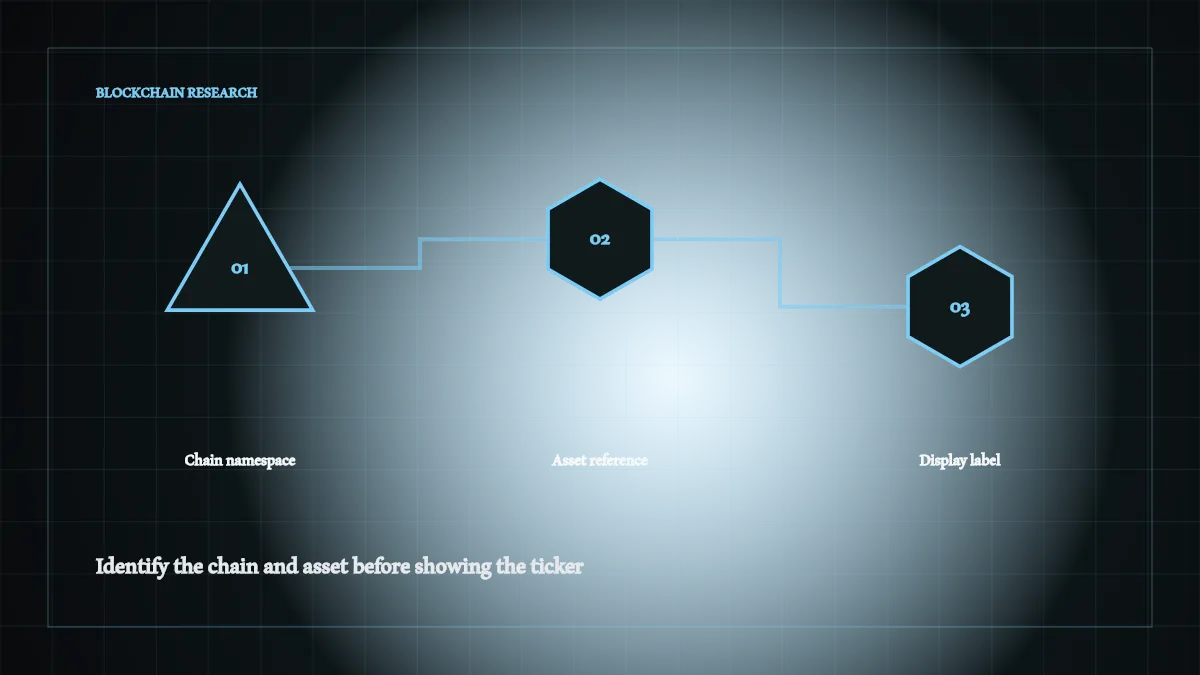
A product can show USDC twice in a balance picker with the same logo and name. Those labels serve the reader. The ledger, deposit service and analytics pipeline need an identity they can compare without guessing which chain the user selected.
Include the chain family and reference
CAIP-2 writes a chain identifier as namespace and reference. Ethereum mainnet is eip155:1 and Base mainnet is eip155:8453. The form puts the identifier in a chain family and keeps the reference attached wherever a system stores or sends the chain value.
Source · CAIP-2 blockchain identifier
Add the asset reference within that chain
CAIP-19 builds an asset type from the chain identifier plus an asset namespace and reference. For a contract-issued ERC-20, this carries the contract address under the ERC-20 namespace. An individual token in a collection can extend the asset type with its token identifier.
Keep display and accounting metadata separate
Store the asset key with every amount and keep the displayed symbol, image and decimals in a supported-asset registry. An inbound transfer for a new asset can then land in a review queue without matching a familiar symbol and silently inheriting its configuration.
What to take away
Before adding a second network, test two assets with the same symbol. Each should retain its own balance, deposit route and reporting identity.