Blockchain research · Analysis
What an EIP-7702 authorization changes on an account
Account code delegation can survive the transaction where it is set. A wallet should show the code destination, chain scope and how to remove it.
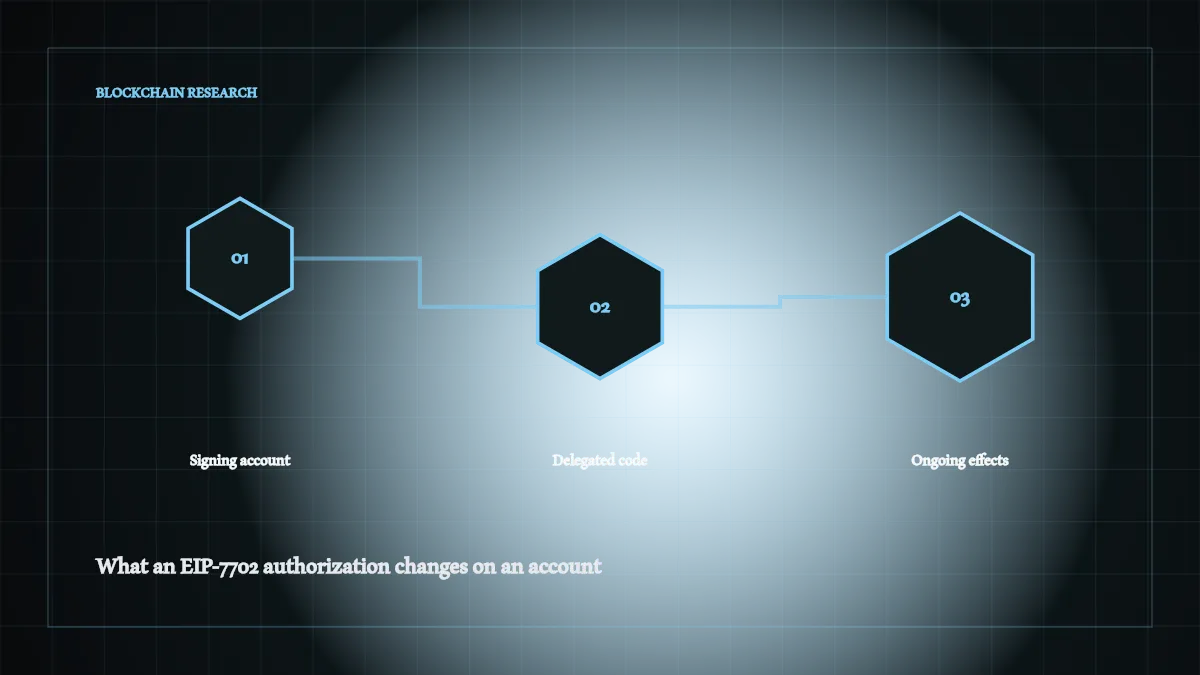
A wallet introduces one-tap actions for an address that customers already use. With EIP-7702, a signed authorization can give that address smart-account behavior through code at another address. The existing address stays in use, which makes the authorization easy to overlook in a busy approval screen.
Read the permission at the account level
The EIP defines an authorization processed by a set-code transaction. When valid, it sets a delegation indicator pointing to a code address. Calls to the authorized account can then use that implementation. The wallet should identify which account and implementation the user is authorizing.
Source · Ethereum EIP-7702 account code delegation · Ethereum.org transaction documentation
Make persistence and scope visible
Delegation can persist after the transaction completes. A product should distinguish the immediate action from the ongoing delegation, show the chain scope, and provide a way to inspect active delegation later. The specification defines clearing with a valid authorization targeting the zero address.
Design a recovery path a customer can find
Test delegates being added, replaced and cleared. In support tooling, show which account received each change. Give the customer feedback for the clear operation and re-read the account’s actual state before calling it complete.
What to take away
Put delegation in the wallet’s security settings with its current destination and scope. A one-tap onboarding flow needs a discoverable way out.