Blockchain research · Analysis
From an ENS name to the actual receiving address
Follow what happens after someone enters a Basename, including forward resolution, reverse display and the network check before sending.
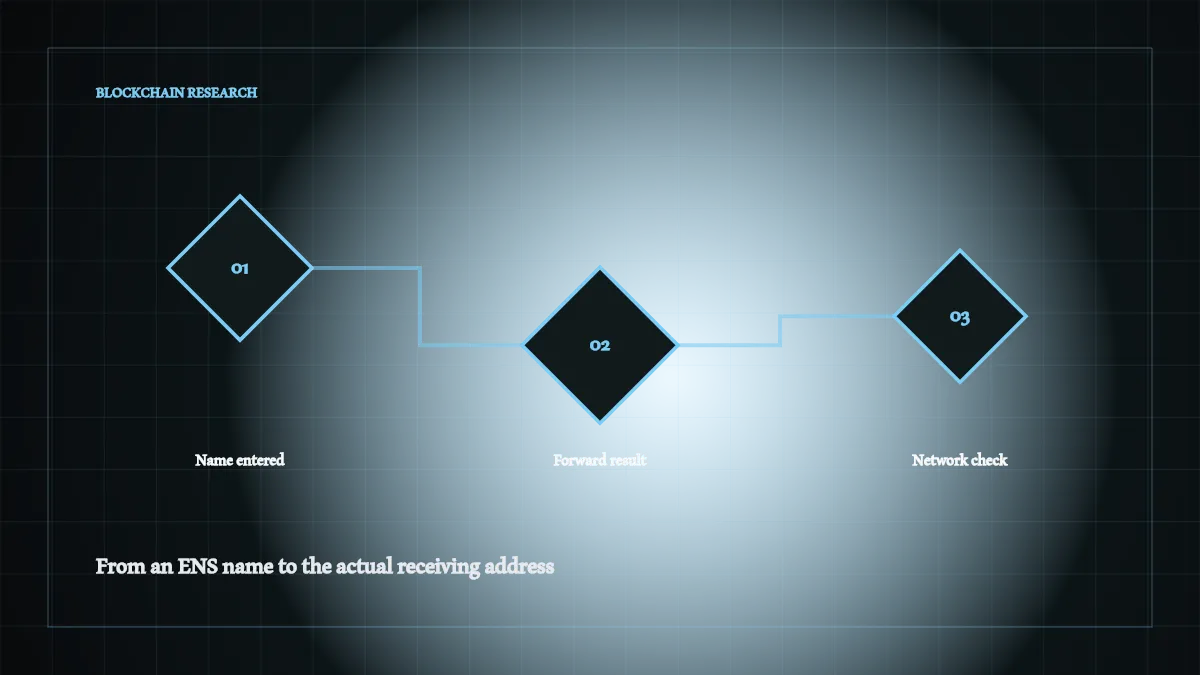
Readable names make a send screen easier to scan. A sender still needs enough information to confirm where the funds will go. A useful wallet keeps the name, destination address and chosen network visible through the final confirmation.
Resolve the input in the forward direction
Forward resolution looks up the record for the name the sender entered. ENS supports different record types, including addresses, so the client needs to request the intended record and handle missing resolution explicitly. Basenames use the .base.eth namespace for identities on Base.
Source · ENS name resolution documentation · Base Basenames product and network guidance
Treat reverse names as a display step
Reverse resolution starts with an address and can produce a primary name. A client that displays this name should run the forward check too and compare the resolved address with the original. This confirms that the label points back to the recipient.
Source · ENS name resolution documentation
Keep retrieval and verification in view
Some resolvers retrieve information through CCIP Read. A compatible client handles the gateway response and passes it back to the resolver for validation under that resolver’s rules. A failed lookup belongs in the send flow as an error the user can act on.
Source · ENS Layer 2 and offchain resolution
What to take away
Show the resolved destination at confirmation, with the selected network beside it. A readable label is most useful when the rest of the route remains inspectable.