Applied AI · Analysis
What ChatGPT usage data tells a product team
Use the consumer usage study to frame product research and respect the limits of survey, classifier and platform samples.
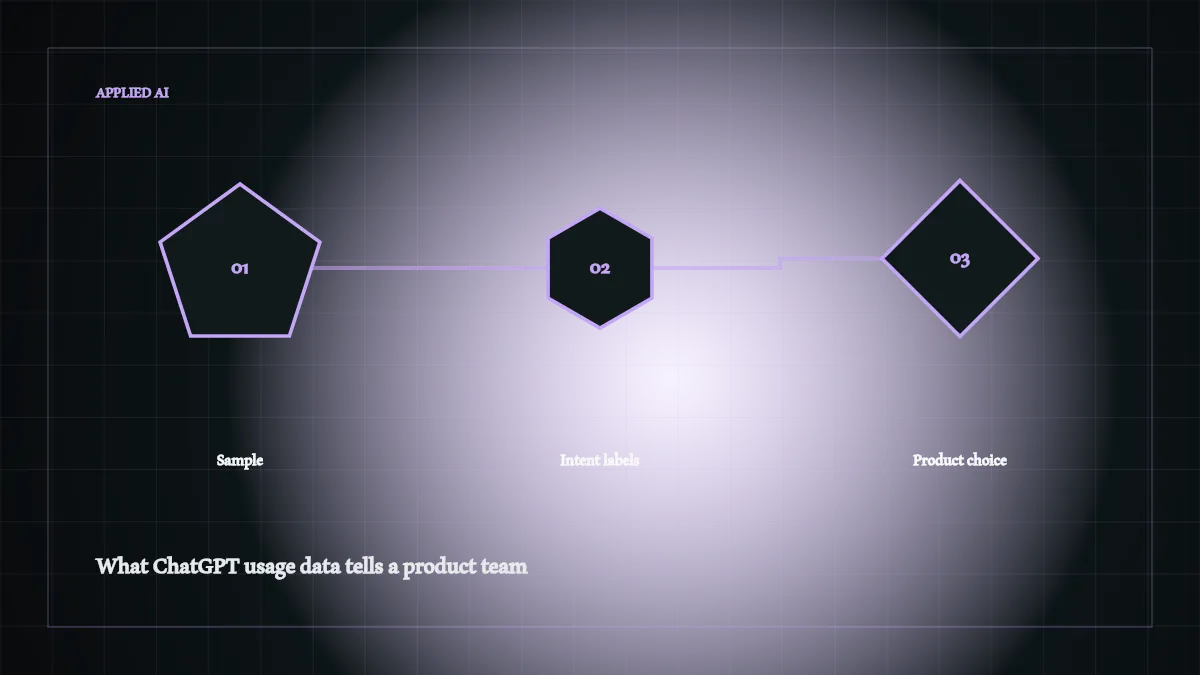
The September 2025 study on consumer ChatGPT use is unusually useful for product planning because it looks at the kind of help people ask for. A roadmap still needs evidence about a specific audience and task. Two providers’ research illustrates why.
How OpenAI studied usage
OpenAI and its coauthors described a privacy-preserving analysis of 1.5 million conversations. They classified patterns of use, including practical guidance, seeking information and writing. Those categories help formulate interview questions about what a user wants by the end of a session.
Why provider data needs a boundary
Anthropic’s Economic Index uses its own product data and classification framing. Its June 2026 report examined cadences and introduced survey findings about effects beyond individual sessions. Differences in product audience, unit of analysis and measurement can drive differences across reports.
Source · Anthropic — Introducing the Economic Index · Anthropic — Economic Index: Cadences
Make discovery match your product
For a document assistant, label a small opt-in sample by the user’s desired outcome: understand a clause, create a draft, or decide which version to review. Ask users if they accomplished that outcome and capture failures separately. Compare the pattern with the research while preserving your sample size and definition of success.
Source · OpenAI and NBER — How people are using ChatGPT · Anthropic — Economic Index: Cadences
What to take away
Use platform studies to choose questions for discovery. Base the feature decision on evidence from the intended users.