Crypto guides · Analysis
Why stablecoin supply and payment volume can move apart
Read stablecoin market coverage by separating outstanding tokens, raw transfer activity and methodology-filtered payment measures.
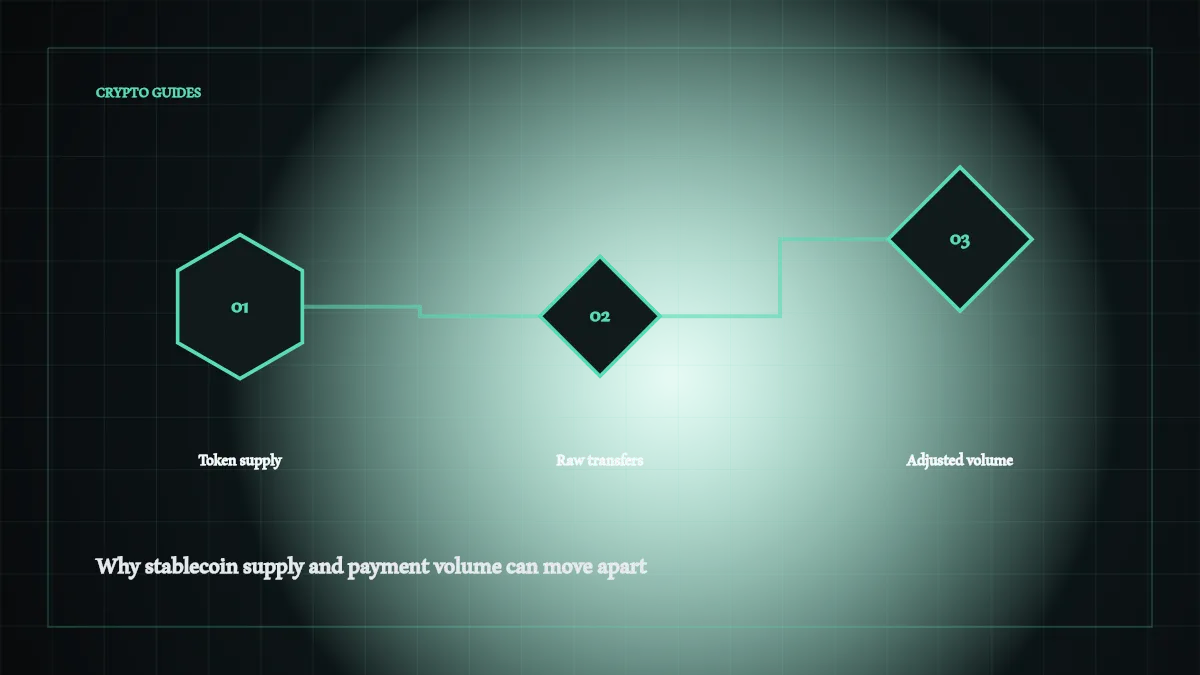
CoinDesk’s November 2026 reporting contrasted relatively stable aggregate supply with increased reported payment activity. The useful lesson is about measurement. Outstanding tokens are a stock at a point in time, while transfer or payment volume sums activity over a period.
The same tokens can circulate several times
If a business receives 100 tokens, pays a supplier, and the supplier pays another business, the same balance can produce multiple payments. Supply need not increase just because the amount that changes hands during the month rises.
Source · CoinDesk reporting on stablecoin supply and payment volume, November 2026
Raw transfer value mixes activities
Transfers can come from exchange inventory management, DeFi, routing and ordinary payments. Visa’s on-chain dashboard documents adjustment and classification choices. Those filters have assumptions and should be cited alongside a number derived from them.
Choose wording that matches the calculation
When comparing totals, record networks, token types, dates, denomination and filters. If the methodology captures an adjusted transfer series, identify it that way. Additional classification evidence is necessary before every movement can be described as a consumer purchase.
Source · CoinDesk reporting on stablecoin supply and payment volume, November 2026 · Visa Onchain Analytics methodology and dashboard
What to take away
Start with the question. Adoption, settlement throughput and circulating supply can require different metrics, even when the news headline calls them all stablecoin activity.