Crypto guides · Analysis
How to read a swap quote when prices are moving
Distinguish quoted output, price impact and slippage tolerance so a swap preview becomes a concrete decision rather than a vague warning.
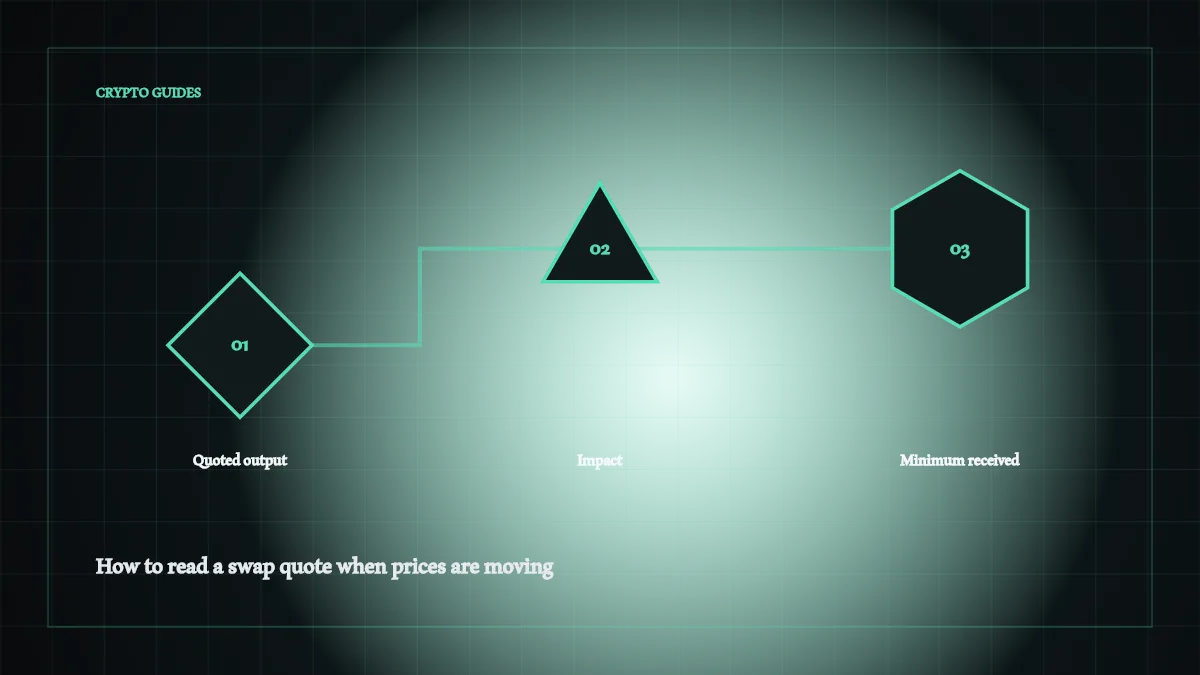
A swap estimates 980 units out for a given input and also shows a smaller minimum. A separate number describes price impact. All three can move as you change the input, but they answer different questions. Reading them together gives the trade actual decision boundaries.
Start with the current route
The quote estimates output from a route and market state. Price impact describes the trade’s effect on the execution price, given liquidity and route. It may increase for a larger order or thin liquidity even if the market is otherwise unchanged.
Read the execution guard explicitly
Slippage tolerance allows a margin for changes between quote and execution. In an exact-input swap, the minimum output is the practical check. If the route cannot deliver the minimum and the guard is enforced, the transaction can revert instead of delivering less than the bound.
Compare a small and a larger input
With the same assets and chain, compare two input sizes without submitting them. A rising price impact suggests the larger trade consumes liquidity less efficiently. Changing the tolerance can change what execution accepts. It does not add liquidity to the route.
What to take away
Use the minimum received as your execution boundary and compare quoted output and price impact separately. A broad slippage tolerance is not a better price.