Applied AI · Analysis
When a translated AI benchmark changes the question
Use matched original and translated test items to detect answer-key shifts, ambiguity, or local assumptions before attributing score gaps to a model.
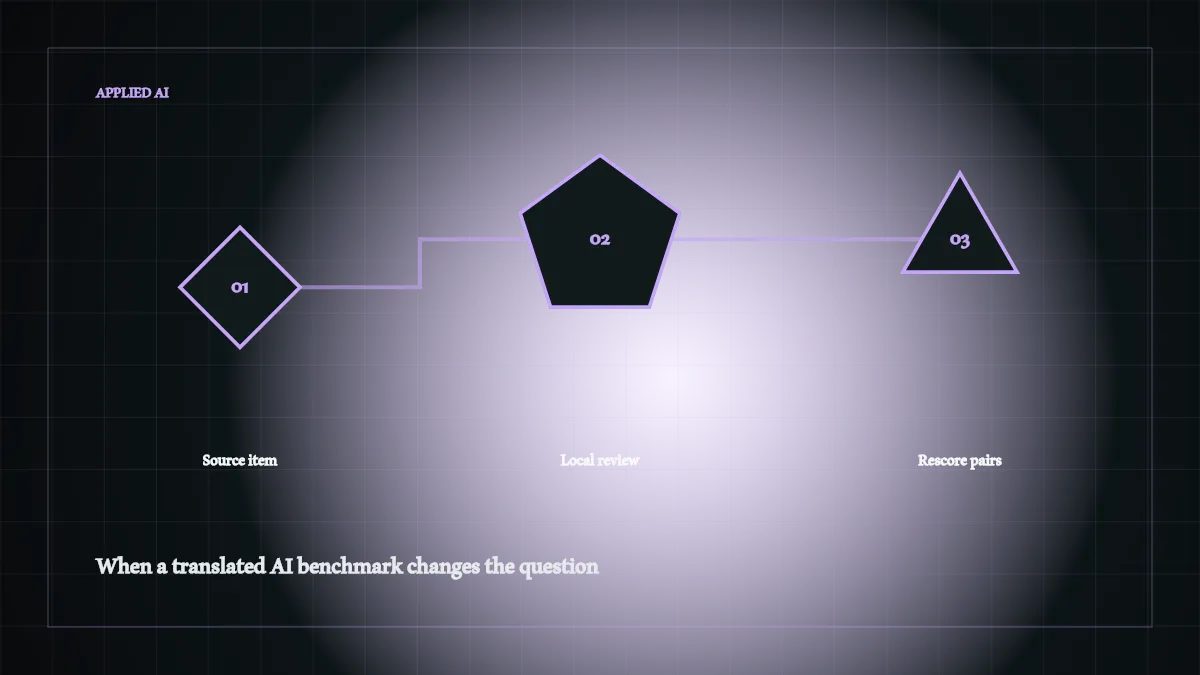
A Persian benchmark item may look natural yet have a different correct answer from the English original. Once the answer key shifts, a single language-gap number combines the behavior of the model with a defect in the benchmark.
Ask translators to validate the answers
A 2026 ACL study examined how translation errors affect multilingual evaluation. For each selected item, give a native reviewer the translated version and its choices before showing the source. Ask what answer is correct, which phrase provides evidence, and whether more than one reading is defensible.
Source · ACL 2026 — Quantifying translation errors in evaluation
Compare paired items before aggregating
Mark omitted qualifiers, different units, culturally bound assumptions, changes of negation, and parallel choices that merged in translation. When the reviewer changes the answer key, write a short reason and recheck the repaired item with a second reader. Preserve item IDs across versions.
Source · ACL 2026 — Quantifying translation errors in evaluation
Show the score before and after repair
Run both versions with identical instructions and track the cases that changed from pass to fail or fail to pass. Publish the affected label and the comparison sample size. In a locally authored set, verify the expected answer from independent evidence and test tasks that users actually ask in Persian.
Source · Liang et al. — Holistic Evaluation of Language Models
What to take away
A paired, reviewable benchmark lets a team distinguish language performance from errors in the test itself.